Peptide Purity & Quantitation Testing
Peptide Pureness Determination Innovative Peptides-peptide Medication Discovery
Various other methods like electrophoresis, capillary electrophoresis (CE), and nuclear magnetic resonance (NMR) can likewise be utilized to examine peptide structure, fee, and pureness, ensuring thorough characterization. In COA testimonial, it usually consists of HPLC purity testing, mass spectrometry identity confirmation, and batch-specific paperwork revealing the tested whole lot, technique, results, and date. For peptide purity screening, reverse-phase HPLC is the conventional theoretical design. The chromatographic pureness is then computed by contrasting the location under the primary optimal with the overall area under all integrated heights.Reliable peptide distributors constantly mark their products by doing this and supply top quality records with HPLC and MS information to support the pureness level. As long as you get peptides from a relied on source that gives a full certification of evaluation, you can be positive in the peptide's purity quality and usage extent. Peptides are evaluated through a combination of strategies, consisting of HPLC for purity, mass spectrometry (MS) Protein Science for sequence verification, and nuclear magnetic resonance (NMR) for structural evaluation. These methods help determine the peptide's composition, confirm the molecular weight, and find any structural alterations or contaminations, guaranteeing the peptide fulfills top quality and spec needs. With our comprehensive peptide analysis system, Creative Proteomics has developed an extremely delicate and customized system.
Throughout solid-phase synthesis, each amino acid combining step has a return of approximately 99-- 99.8%. When a coupling fails, the growing chain is covered to avoid more elongation of the inaccurate sequence. The result is a peptide that's much shorter than meant-- missing out on several amino acids.Services
These alterations transform the peptide's organic activity and chromatographic account. Peptides are delicate to temperature, light, and enzymatic environments, making them vulnerable to deterioration, which impacts efficiency. BOC Sciences gives increased stability, light stability, and chemical destruction experiments to methodically evaluate solution stability threats.- Nevertheless, accomplishing ultra-high pureness (state 99%) can be practically difficult and might not always be essential, as we'll discuss later.
- Peptides are commonly utilized in the medical appearances, cosmetics, and biomedical fields because of their distinct organic task and wide application potential.
- Another associated term you may encounter is internet peptide content, which is various from pureness.
- Our lab makes use of advanced instrumentation and validated methods to guarantee precise, reproducible information across also one of the most intricate peptide matrices.
- A single common chromatographic method is often not nearly enough for peptides that are hydrophobic, extremely fundamental, carefully relevant in turn, or partly purified.
- When a peptide is 98% pure, that staying 2% isn't arbitrary noise-- it's specific, recognizable kinds of byproducts.
It is one reason correct peptide storage space and reconstitution practices issue. Partial peptide fragments can result from incomplete synthesis or post-synthesis destruction. These pieces are typically smaller than the target peptide and might elute at various retention times.
Mass Spectrometry (ms): Identification Confirmation
We utilize GC-MS, ICP-MS, and various other approaches to identify contaminations, ensuring product safety and governing compliance. Peptide sequencing is essential for identifying the specific amino acid sequence of peptides, including alterations like phosphorylation or acetylation. Sequencing allows scientists to comprehend the biological function of the peptide and its communication with various other particles, aiding in the design of functional peptides for varied applications. The peptide example is liquified in a suitable solvent and loaded into an autosampler.

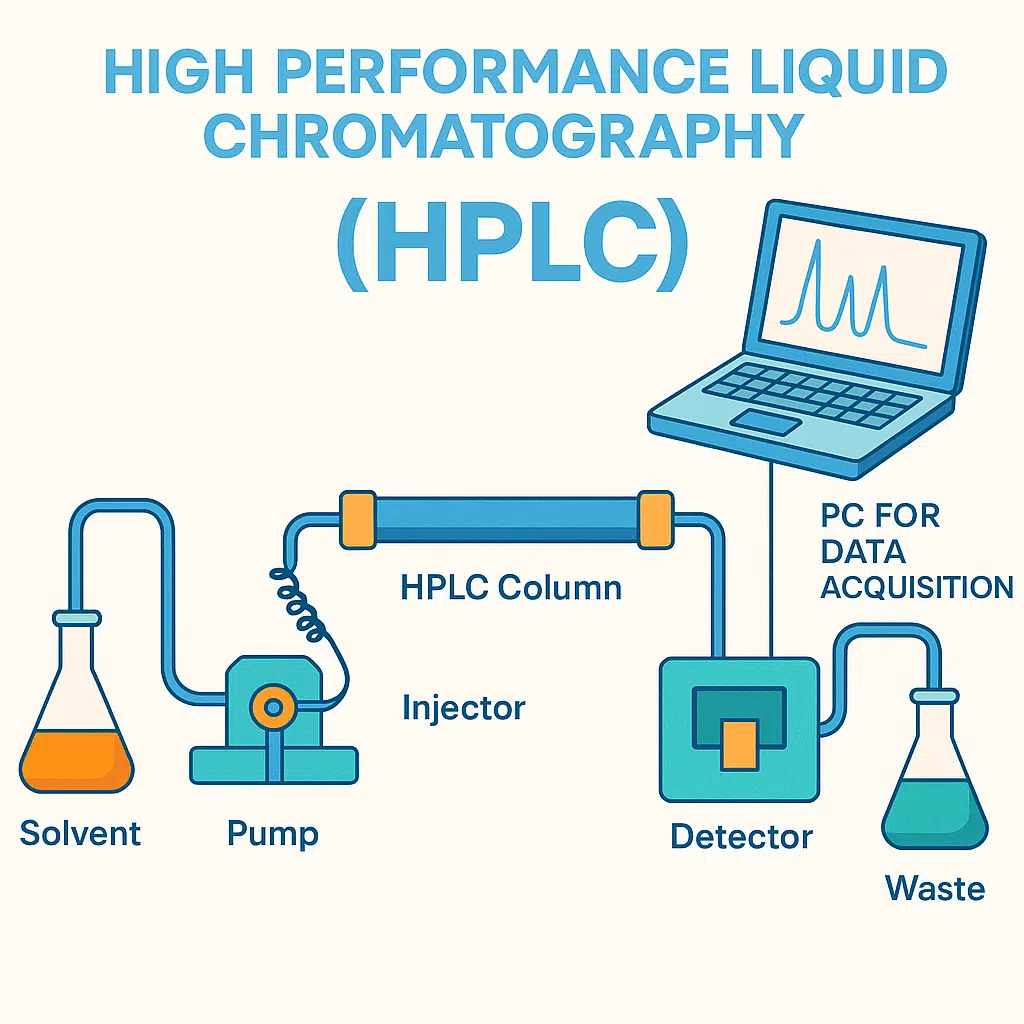
These can be especially problematic since their chromatographic habits is really similar to the target peptide, making them more challenging to separate during purification. When a peptide is 98% pure, that staying 2% isn't random noise-- it's specific, identifiable kinds of results. Mass spectrometry determines the molecular weight of a compound with extreme accuracy. For peptides, the most usual strategies are electrospray ionization (ESI-MS) and matrix-assisted laser desorption/ionization time-of-flight (MALDI-TOF). HPLC separates a combination into its individual elements based upon how each particle communicates with a specially made column.
It's feasible to have a peptide that is, state, 95% pure by HPLC and yet the net peptide content is something like 70% of the powder's weight (the rest being water and salts). Don't be upset-- this is regular and is typically determined by different analyses (like amino acid evaluation). Peptide pureness is most typically determined by high-performance fluid chromatography (HPLC) with a detection wavelength of 220 nm, which is optimum for detecting peptide bonds. This technique divides peptides from pollutants and quantifies both target peptides and impurities, making certain high-quality examples for research study.